Sleep & Recovery
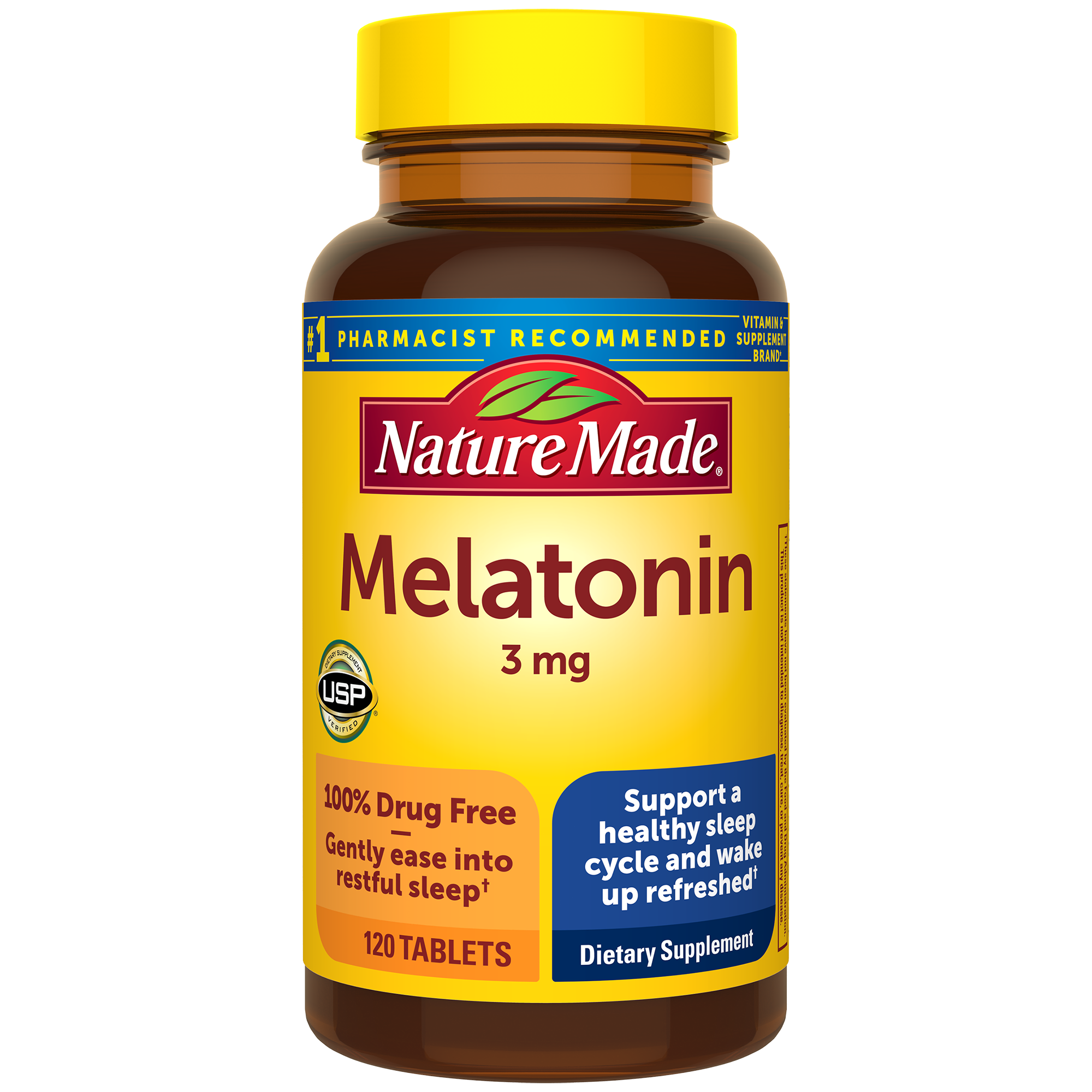
Nature Made Melatonin
A USP Verified melatonin tablet from the same manufacturer behind Nature Made's Vitamin D3 line — available in 3mg and 5mg strengths.
3mg / 5mgUSP VerifiedNon-Habit Forming
We have not independently lab-tested this product ourselves. See our guide on magnesium and melatonin for context on realistic dosing ranges and what melatonin actually does before you buy any brand.
We link to Amazon and may earn a commission from qualifying purchases at no extra cost to you
Label Check
Third-party certificationUSP Verified
ManufacturerPharmavite LLC — founded 1971, owned by Otsuka Pharmaceutical
Available strengths3mg and 5mg tablets, 2.5mg gummies
Where to buy
Melatonin dosing accuracy is a real, documented problem industry-wide — USP Verification is a genuine, checkable reason to trust this specific product's label over an uncertified alternative.
See it on Amazon →
As an Amazon Associate, we earn from qualifying purchases.
What it's marketed for
Nature Made markets this product as helping "regulate sleep and wake cycles," and states it is "100% drug free" and "non-habit forming." It is not marketed as treating insomnia as a diagnosed medical disorder.
What we found
Why the USP seal matters more here than for most supplements
Independent testing cited by the National Center for Complementary and Integrative Health has found that a majority of tested over-the-counter melatonin gummies contained amounts significantly different from their labeled dose — in some cases over three times the stated amount. Nature Made's 3mg Melatonin carries USP Verification, meaning it's been independently confirmed to contain what the label states — a meaningfully bigger deal for this category than for most.
Realistic expectations, not a sedative
Melatonin is a hormone signal for your body's internal clock, not a sedative — it's better evidenced for circadian-timing issues like jet lag than for general insomnia. See our full guide for realistic dosing context before deciding how much to take.
Worth knowing: melatonin can interact with blood-pressure medications (beta-blockers, calcium channel blockers, clonidine), potentially causing excess blood-pressure lowering or dizziness, and general medical guidance advises caution combining it with other sedatives or giving it to children without medical guidance. These statements have not been evaluated by the FDA. This product is not intended to diagnose, treat, cure, or prevent any disease. Consult a healthcare provider before starting any new supplement, especially if you take medication or have a health condition.