General Wellness
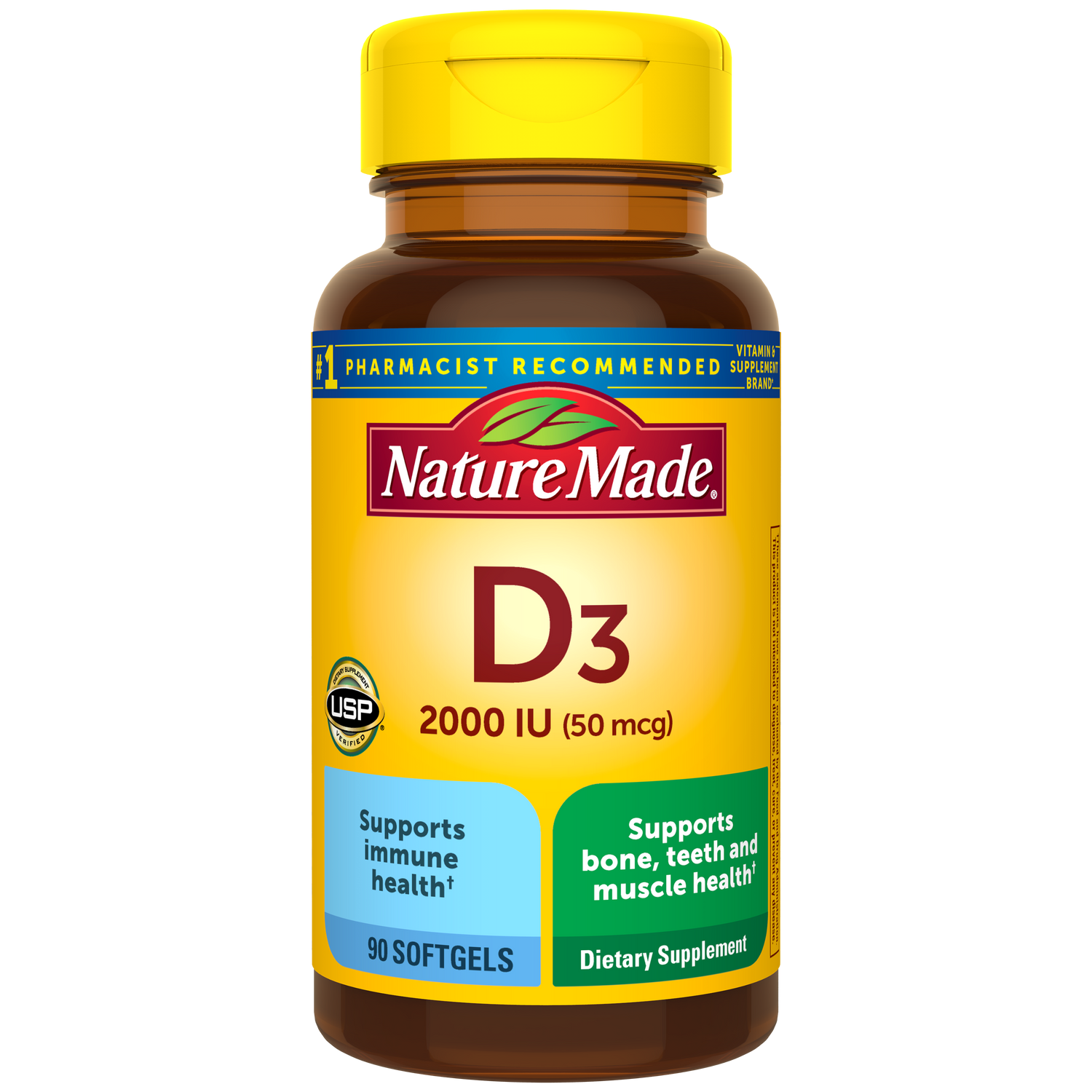
Nature Made Vitamin D3
A widely sold vitamin D3 softgel from one of the most established supplement manufacturers in the US, available in 1000 IU and 2000 IU strengths.
1000 IU / 2000 IUUSP VerifiedGluten-Free
We have not independently lab-tested this product ourselves. The certification and company facts below are sourced from Nature Made's own published USP Verification status and public company records.
We link to Amazon and may earn a commission from qualifying purchases at no extra cost to you
Label Check
Third-party certificationUSP Verified (confirmed on Nature Made's D3 line)
ManufacturerPharmavite LLC — founded 1971, owned by Otsuka Pharmaceutical
Serving1 softgel/day, 1000 IU or 2000 IU
Where to buy
Nature Made is one of the few mass-market vitamin brands with actual USP Verification on this specific product line — a real, independent, per-product seal, not just a facility-level certification.
See it on Amazon →
As an Amazon Associate, we earn from qualifying purchases.
What it's marketed for
Nature Made markets Vitamin D3 as supporting "bone, teeth, muscle and immune health," and states it helps the body absorb calcium to support strong bones. The brand also cites an NIH-funded VITAL trial sub-study in some marketing materials, which found that 2,000 IU/day over 4 years was associated with slower telomere shortening — a specific, cited research finding, not a general product claim, and we're presenting it the same way here: as one study's finding, not an assured effect of taking this product.
What we found
A real, independently verified certification
USP Verification confirms a product contains what the label says, in the stated amounts, without harmful contaminant levels, made under good manufacturing practices. Nature Made states it was the first national US vitamin brand to earn this on many of its products, including its D3 line — a genuine, checkable, per-product seal rather than a general company claim.
A long-established, findable manufacturer
Pharmavite LLC has made Nature Made products since 1971 and has been owned by Otsuka Pharmaceutical, a large Japanese pharmaceutical company, since 1989. This is a real, decades-old manufacturer with a public track record — not an anonymous or newly formed private-label brand.
These statements have not been evaluated by the FDA. This product is not intended to diagnose, treat, cure, or prevent any disease. Consult a healthcare provider before starting any new supplement, especially if you take medication or have a health condition.
Who should talk to a doctor first
Vitamin D, calcium, and thiazide diuretics
Vitamin D increases how much calcium your body absorbs from food, and thiazide diuretics already reduce how much calcium your body excretes in urine — combined, high-dose vitamin D and a thiazide diuretic can push blood calcium higher than either would alone, raising the risk of hypercalcemia. People with hyperparathyroidism, or who are already taking a separate calcium supplement, face a similar risk of calcium levels climbing too high, and should talk to a doctor before adding a vitamin D supplement on top of what they're already taking.