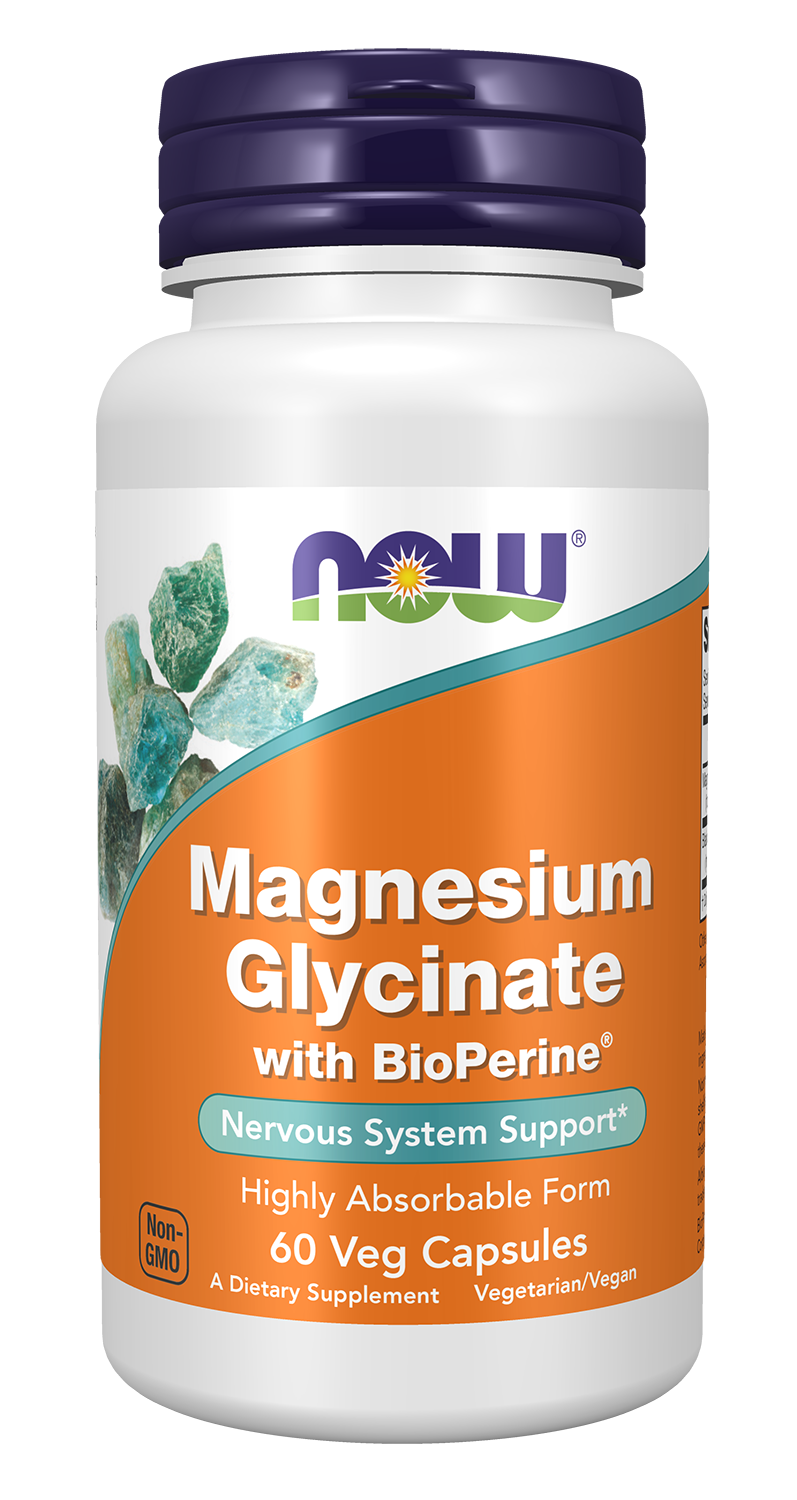

A chelated magnesium bisglycinate supplement from a family-owned manufacturer with its own in-house testing labs.
We have not independently lab-tested this product ourselves. We could not confirm a product-level third-party seal (like NSF Certified for Sport or USP Verified) for this specific SKU — we're saying so plainly rather than implying one exists.
We link to Amazon and may earn a commission from qualifying purchases at no extra cost to youHonest framing matters here: this product has real manufacturing-process rigor behind it, but not a specific per-bottle testing seal — worth knowing the difference before you buy.
See it on Amazon → As an Amazon Associate, we earn from qualifying purchases.NOW markets this product as supporting "healthy muscle, nerve and heart functions" — standard structure/function language for a magnesium supplement.
NOW Foods manufactures under an NPA A-rated Good Manufacturing Practices program with its own in-house, ISO/IEC-accredited testing laboratories — a genuine, real process-level certification. But that's different from a per-product seal like NSF Certified for Sport or USP Verified, which we could not confirm exists for this specific magnesium glycinate SKU. We'd rather tell you that distinction plainly than imply a badge that isn't there.
NOW Foods was founded in 1968 by Elwood Richard and remains family-owned, headquartered in Bloomingdale, Illinois, with over 1,500 employees and distribution in 60+ countries — a real, long-established manufacturer, not a repackaged import.
Each 2-tablet serving provides 200 mg of elemental magnesium (48% of the Daily Value), sourced from 2,000 mg of magnesium bisglycinate — a chelated form where magnesium is bound to the amino acid glycine. The number that matters for your intake is the elemental magnesium amount (200 mg here), not the total compound weight, since the compound also includes the glycine carrier. For more on reading amounts like this correctly, see our guide on how to read a supplement label.
NOW Foods employs more than 1,500 people and distributes its products to over 60 countries — a genuine indicator of scale for a company that remains family-owned rather than a small, obscure operation.
Loop and thiazide diuretics can deplete the body's magnesium over time, which is worth knowing if you're on one of those medications and considering a magnesium supplement. People with kidney disease should talk to a doctor before starting magnesium, since impaired kidneys may not clear excess magnesium the way healthy kidneys do. Large magnesium doses can also interfere with the absorption of certain antibiotics and osteoporosis medications if taken at the same time — spacing doses a few hours apart is generally recommended in that situation.
Magnesium comes bound to different carrier compounds — glycinate (chelated to the amino acid glycine), citrate, oxide, and others — and the carrier affects absorption and GI tolerability more than the "magnesium" itself does. Glycinate is generally considered one of the better-tolerated chelated forms for regular use.
Per the NIH Office of Dietary Supplements, the general Recommended Dietary Allowance is about 400–420 mg/day for adult men and 310–320 mg/day for adult women, counting all sources — food and supplements combined, not just this product.
Real labels. Real ingredients. Real reviews.